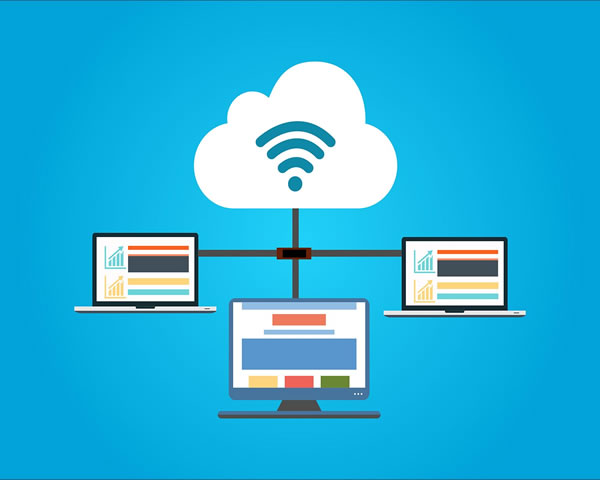
This article uses practical cases to demonstrate how to use cost-effective Malaysian cloud hosts to support small sites and development/testing environments, covering key points such as selection, basic configuration, performance tuning, monitoring, and backup, making it easy for developers and webmasters to get started quickly and avoid common risks.
How many resources can meet the needs of a typical small website and testing environment?
Generally, for a small website with low traffic and mainly static and a few dynamic requests, as well as a parallel testing environment, it is recommended to configure at least 1 vCPU + 1–2 GB of memory, 20–40 GB of SSD, and 1 TB/month bandwidth. If running WordPress, Node, or lightweight APIs, 2 vCPU + 2–4 GB is more reliable.
Which configuration combination offers the best value for cheap servers in Malaysia?
Within a limited budget, it is recommended to choose instances with SSD storage, monthly billing, and snapshot support. Typical combination: 1 vCPU / 2 GB / 40 GB SSD + 1 TB of traffic for development and small stations; Or 2 vCPU/4 GB/80 GB SSD for production environments. The key is the features of snapshot backup and simple snapshot recovery.
How to set up a stable test environment on the server and isolate the live environment?
It is recommended to use two independent instances or isolate them within the same instance using a container. Test environments and production environments should be configured with different databases, domain names or subdomains, and independent reverse proxy rules. One-click replication of the environment is achieved using snapshots and mirrors, facilitating rollback and consistency verification.
Where can you deploy to balance cost and access speed?
Choosing a data center in Malaysia benefits the speed and latency of Southeast Asian traffic. If the target users are concentrated in this area, using Malaysian nodes can significantly reduce response times. If global coverage is needed, static resources can be cached at the edge with CDNs (free or paid).
Why prioritize cheap servers in Malaysia over local or more distant cloud services?
Reasons include low regional latency, often more competitive prices than international giants, user-friendly experience in Southeast Asia, and simpler localized payments and tax processing. For small teams, choosing low-cost regional instances enables rapid deployment and iteration within a controlled budget.
How to optimize the performance and stability of a site on low-end servers?
Key measures include: using Nginx or Caddy for reverse proxy and static acceleration; Enable gzip/brotli compression and cache headers; Enable page caching or Redis caching dynamic requests; Limit concurrent connections and reasonably set the number of worker processes in PHP-FPM or Node; Monitor CPU/memory and disk IO bottlenecks.
Where can you save costs without sacrificing reliability?
Outbound traffic can be reduced by on-demand expansion, using automatic snapshots instead of high-frequency backups, choosing monthly bandwidth billed by data, prioritizing SSDs, and working with CDNs. Migrating non-critical services to inexpensive object storage (such as S3 compatibility) can also save long-term costs.
How can you configure security settings to reduce the risks associated with cheap servers?
Basic security items include: disabling unnecessary ports, enabling firewalls (ufw/iptables), logging in with SSH keys and disabling passwords, setting up Fail2Ban to prevent brute force attacks, regularly updating systems and applications, and using reverse proxies and Web Application Firewalls (WAF) to externally expose services.
How to build a simple and usable backup and restore strategy?
Recommended backup strategy: daily database backup + weekly full disk snapshots; Backups are kept for at least 7 days, and critical backups are stored off-site. Drill recovery processes to ensure snapshots are quickly restored across different instances and to verify consistency, avoiding single points of failure that can lead to prolonged downtime.
Why do monitoring and alerts still work, even for small projects?
Monitoring can detect resource bottlenecks, traffic anomalies, and service crashes in advance, preventing user impact. Key metrics include CPU, memory, disk IO, network bandwidth, response time, and error rate. Set threshold alerts (such as CPU > 80% lasting 5 minutes) and connect email/WeChat/Slack notifications.
How much budget can support these practices and ensure maintainability?
In terms of budget, the basic plan costs about 5–15 USD per month (or equivalent ringgit) to meet the minimum requirement; A more reliable production setup is about $15–40 per month, including snapshots and backups. Adding CDN and domain fees, the annual cost usually ranges from $200 to $700, suitable for small teams and individual projects.
How can you gradually scale without affecting existing services?
Adopt phased scaling: first optimize applications and caches, and assess bottlenecks; Then expand horizontally (add instances, perform load balancing) or upgrade vertically (with larger instances). Using mirroring and automated deployment (Ansible/Terraform) ensures consistent environments and smooth transitions during scaling.
- Latest articles
- Popular tags
-

The Most Stable Rechargeable Malaysian Game Server Reveals
this article will introduce in detail how to select and recharge malaysian game servers and provide practical operation guides. -

-
From Bandwidth To Routing, Look At The Advantages Of Malaysian Cn2 Gia In Overseas Access Scenarios
Detailed evaluation: Analyze the advantages of <b>Malaysia cn2 gia</b> in the <b>overseas access</b> scenario from the perspectives of <b>bandwidth</b> and <b>routing</b>, including deployment suggestions, evaluation methods and cost-effective analysis.